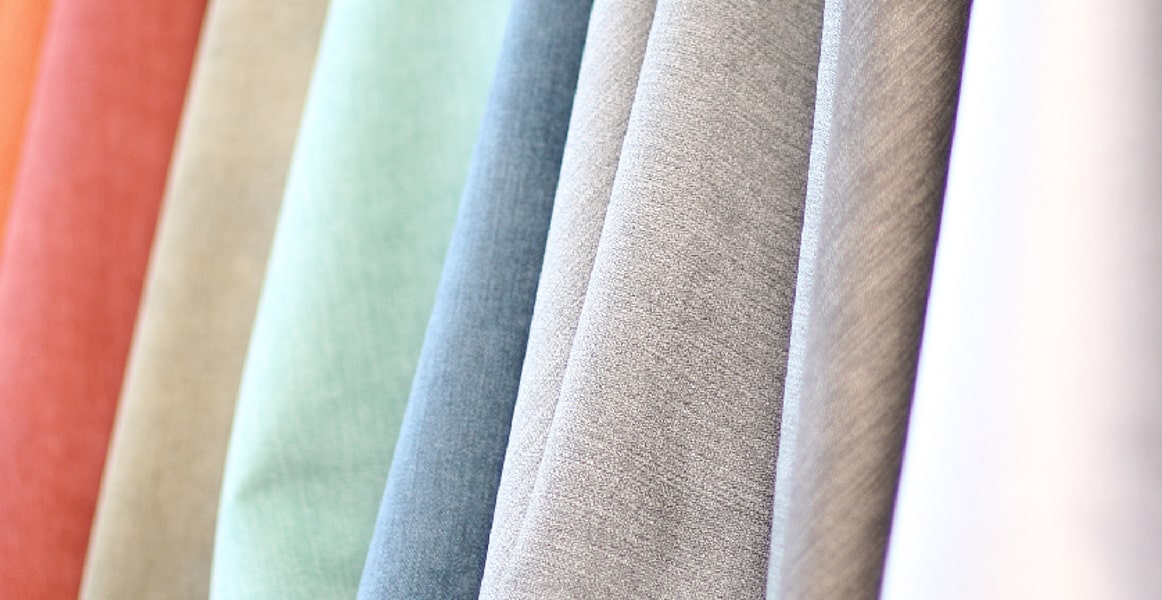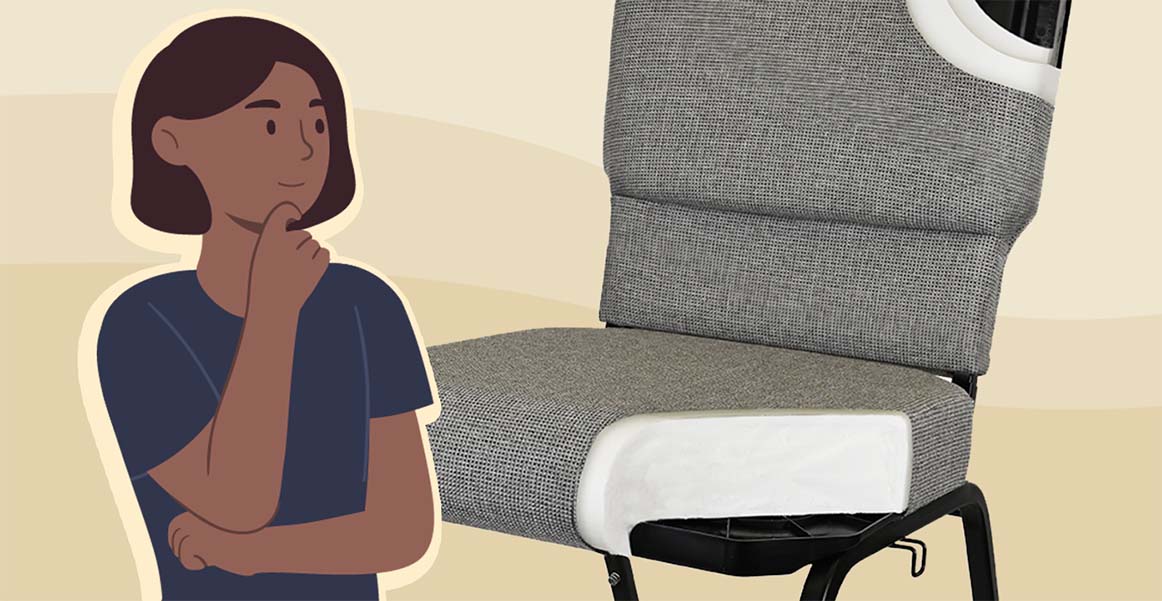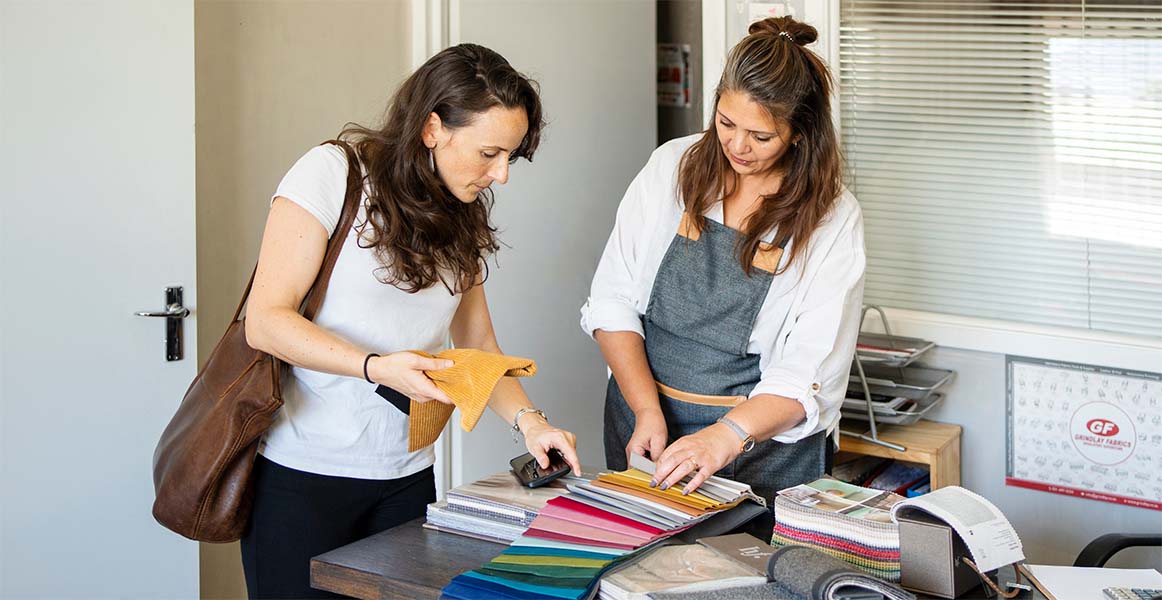
You’ve met with the committee, settled on church chairs that fit your budget, and made it to the fun part: choosing the worship chair upholstery. Miss Betty likes a dark brown woven pattern because it hides stains. You favor a handsome navy. You click between swatches, comparing colors and patterns, until you scroll down to the specifications.
250,000 double rubs. Class 5 crocking. Class 5 lightfastness. WS cleaning code. Six mysterious ACT symbols.
Suddenly, choosing church chair fabric feels a little less like picking a color and more like deciphering a code.
Those upholstery fabric ratings tell you how a fabric performed under standardized tests. More importantly, they help you understand how that same fabric may perform amid the people, sunlight, spills, and everyday use inside your church.
Let’s translate those fabric codes into real life.
Double Rubs: Sunday After Sunday After Sunday
A 250,000 double-rub rating sounds impressive. But what does that number tell you?
Double rubs measure abrasion resistance, or how well upholstery holds up against repeated surface wear. Every time someone sits down, shifts in the seat, or gets back up, the fabric experiences friction. Laboratory testing recreates repeated abrasion under controlled conditions. A higher number indicates that the fabric withstood more abrasion during the test.
In real life:
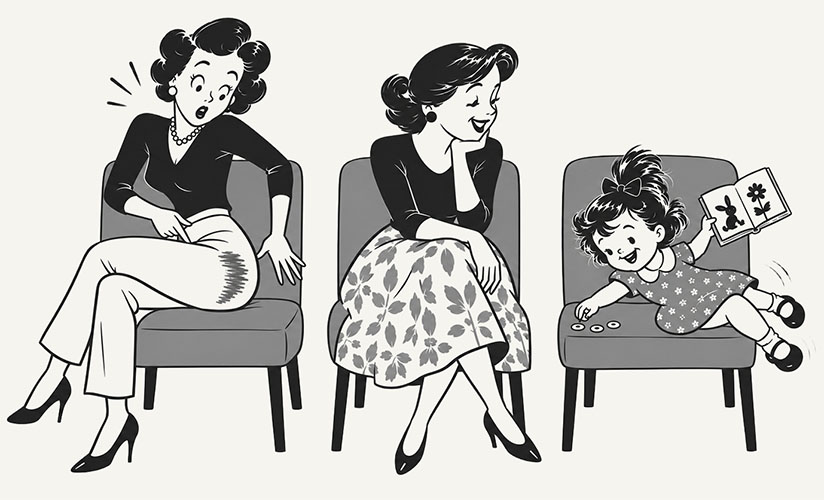
Your bouncy toddler doesn’t like to sit through the Sunday message. She slides on and off the chair chasing little pieces of cereal that dropped from her snack bag. She lies across the seat with a book above her head. She squirms around to wave at the row of older ladies behind you. And because she’s potty training, she gets up twice before the service ends.
That little body puts the upholstery through a surprising amount of friction. Scale that across everyone who sits, shifts, scoots, and gets back up during Sunday services, weddings, activities and community events, and you begin to see what an abrasion rating represents.
Fabric Crocking: Keep the Color on the Chair
Crocking might be an unfamiliar term, but you’ve probably encountered color transfer before. Fabric crocking measures how likely a fabric is to transfer color to another surface through rubbing. Ratings run from Class 1 to Class 5, with Class 5 indicating the highest resistance to color transfer. Fabrics may be tested under both wet and dry conditions.
In real life:
Miss Sarah shows up each week in crisp, light-colored slacks and bright red lipstick. She settles into one of the crimson church chairs and crosses one stiletto over another. If the upholstery has poor resistance to crocking, some of that crimson has a greater chance of transferring to her clothes. Crimson looks fabulous on Miss Sarah’s lips. Across the seat of her pants? Not so much.
Colorfastness: The Sunny Side of the Sanctuary
Natural light can make a sanctuary feel bright and welcoming, but prolonged light exposure can also affect upholstery. Colorfastness to light measures how well a fabric resists fading or color change when exposed to light. Ratings run from Class 1 to Class 5, with Class 5 indicating the strongest resistance to color change from light exposure.
In real life:
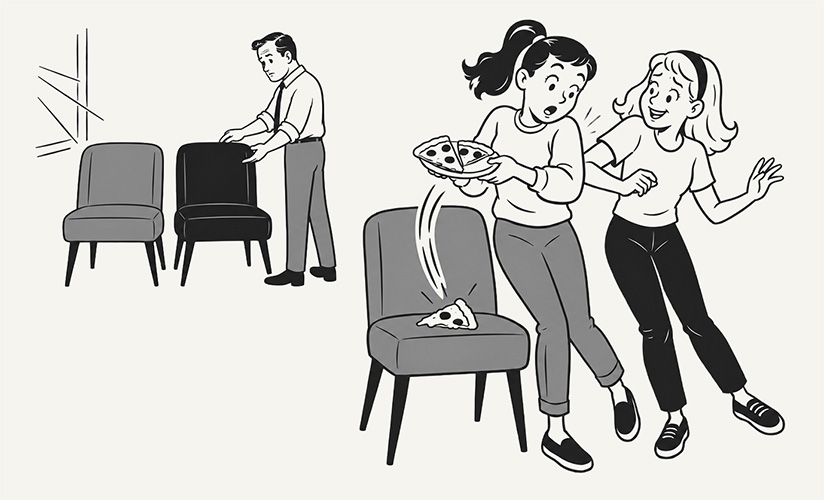
Brother Jensen volunteers to rearrange the sanctuary in preparation for a family funeral. He grabs a dark gray chair that has spent years beside the large windows and places it next to one from the other side of the room.
His eyes aren’t playing tricks on him. He knows they used to match. Now, one looks noticeably more faded than the other.
The chair near the window has enjoyed considerably more sunlight over the years. A strong colorfastness rating indicates greater resistance to that kind of color change.
Cleaning Codes: Before You Reach for the Cleaner
Cleaning codes tell you what type of cleaning method or cleaner the fabric manufacturer recommends. They provide a quick guide for approaching spills and routine cleaning, although the manufacturer’s specific cleaning care instructions should always come first.
W = Water-based cleaners
S = Solvent-based cleaners
WS (or W-S) = Water- or solvent-based cleaners
X = Vacuum or brush only (no cleaners)
In real life:
Molly shows up in the youth room ready for pizza night. With no boys around, she doesn’t hesitate to load three slices of pepperoni pizza onto her plate. She makes it almost all the way across the room before Sophie jostles her elbow.
Pizza, meet upholstery.
Before a youth leader reaches for whatever cleaner happens to be in the supply closet, the cleaning code provides some direction. W, S, WS, or X indicates which type of cleaning method is appropriate for that fabric. A cleaning code doesn’t tell you whether the pepperoni grease will come out. It tells you what you can safely use to try.
Breaking Strength: Holding It Together
Breaking strength measures how much pulling force a fabric can withstand before it breaks. While double rubs measure surface wear from friction, breaking strength looks at how well the fabric itself holds together under tension.
In real life:
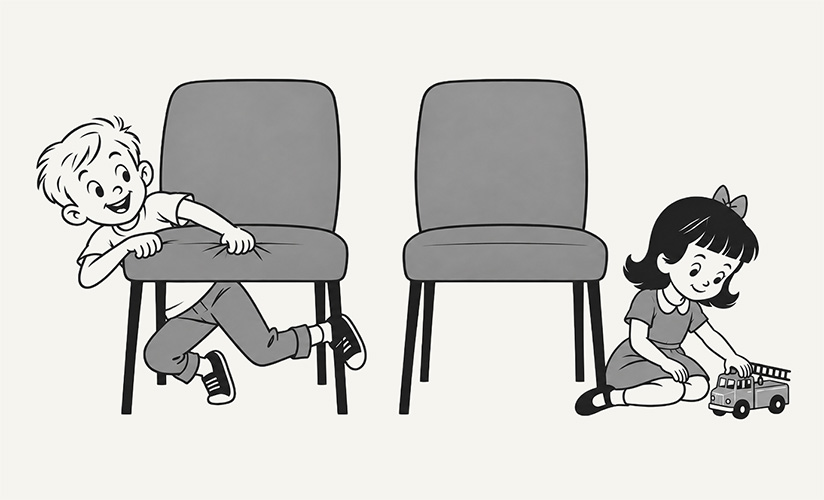
Cohen has never been able to sit still during his youth class. He climbs over the chair, crawls underneath it, sits backward and pulls himself around by the upholstered seat. By the time class ends, the upholstery has experienced more than surface friction. Cohen has also pulled and tugged on the fabric. In this case, breaking strength measures how well the fabric holds together after Cohen has been all over it.
Flammability: Keep This One in the Lab
Flammability testing measures how upholstery performs when exposed to a specific source of ignition under standardized test conditions. It doesn’t mean the fabric is fireproof. It means the upholstery has met a defined performance requirement under specific test conditions.
We’re going to skip the real-life scenario on this one. You get the picture without reliving the disaster.
What Do Upholstery Fabric Rating Symbols Mean?
The Association for Contract Textiles (ACT) publishes voluntary performance guidelines for commercial textiles. Those symbols on the fabric specifications indicate performance in areas you’ve just learned about, including abrasion, crocking, colorfastness, physical properties, and flammability.
Think of them as performance benchmarks, not a ranking of which fabric is “best.” Each test answers a different question about how the fabric performs.
Fabric Ratings, Translated
Double rubs: How well does it resist abrasion?
Crocking: Will the color stay put?
Colorfastness to light: Will the color stay true?
Cleaning code: How can you clean it?
Breaking strength: How well does it hold together under tension?
Flammability: How well does it perform when exposed to ignition?
Fabric Grade Doesn’t Tell the Whole Story
Before a fabric appears among Bertolini’s upholstery options, it has already been vetted for commercial use. The grade ranking system isn’t a pass-or-fail measure of quality. It simply organizes fabrics by selection and price.
Grade A represents Bertolini’s most economical fabric tier, but grade and performance aren’t synonymous. A Grade A textile can still carry substantial commercial performance ratings for abrasion, crocking, colorfastness to light, and other measures.
Higher fabric grades expand the available upholstery choices and customization possibilities. In other words, the grade helps you understand selection and pricing. The specifications help you understand performance.
Read both before choosing the fabric that makes sense for your church.
The Numbers Behind Each Swatch
Now, go back to that handsome navy swatch. The specifications underneath it don’t look quite so mysterious anymore.
You know what those numbers and codes measure, what they don’t promise, and what they can tell you about the fabric you’re considering for your church.
The color may catch your eye. The ratings tell you what comes with it.