Let’s be honest. Church leaders rarely select furnishings because they are marketed as ecofriendly church furniture. Budget, comfort, durability, lead times, and appearance usually rise to the top of the list. Sustainability, on the other hand, often feels like a nice bonus rather than the deciding factor.
Surprisingly, your top priorities lead you to the same solution.
The qualities that make it a smart long-term investment are often the same qualities that make church furniture sustainable. Reliable construction, repairable components, healthier materials, and a long service life all reduce waste over time. When you choose furniture that lasts longer, it reduces replacement cycles. Low-emission materials contribute to healthier indoor spaces. Responsible manufacturing conserves resources long before a chair arrives at your church.
A single certification won’t determine the environmental impact of furniture. It’s the result of hundreds of decisions made throughout a product’s life, from the materials used to build it to how long it stays in service.
If you’re evaluating church furniture, sustainability shouldn’t replace the questions you’re already asking. It should help answer them.

Sustainable Church Furniture Lasts
When you think about sustainable furniture, you might picture extreme, artistic chairs repurposed from plastic bottles and ocean debris. That’s one definition of environmentally friendly manufacturing. But sustainability can be much simpler than that. For generations, people understood the value of buying something once and using it well.
Furniture shouldn’t need to be replaced every few years.
Your facility uses church furniture every day. Volunteers stack, move, store, and use chairs for different ministries throughout the week. When your furniture wears out prematurely, the impact goes beyond the single chair. Sustainable furniture creates fewer disruptions. Furniture that lasts longer means fewer replacement projects, fewer unexpected expenses, and more time spent serving people instead of managing facilities.
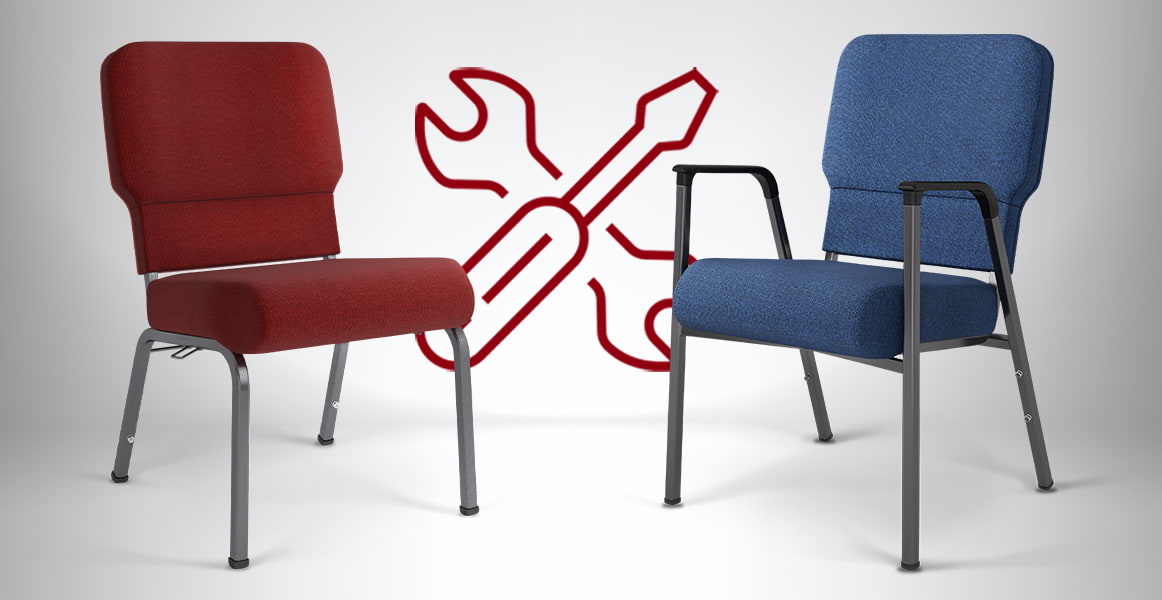
Longevity is one of the most sustainable qualities a piece of furniture can have. Bertolini designs commercial-grade furniture with replaceable parts that can often be repaired instead of discarded, which extends replacement cycles and keeps materials out of landfills longer.
While durable commercial furniture may require a larger initial investment, it often lowers the total cost of ownership by reducing repairs, replacements, and maintenance over time.
Even packaging plays a role. By shipping most church chairs in custom shrink-wrapped stacks instead of fully enclosed cardboard boxes, Bertolini reduces packaging waste while still protecting products during transit.
The Choices Behind Every Chair
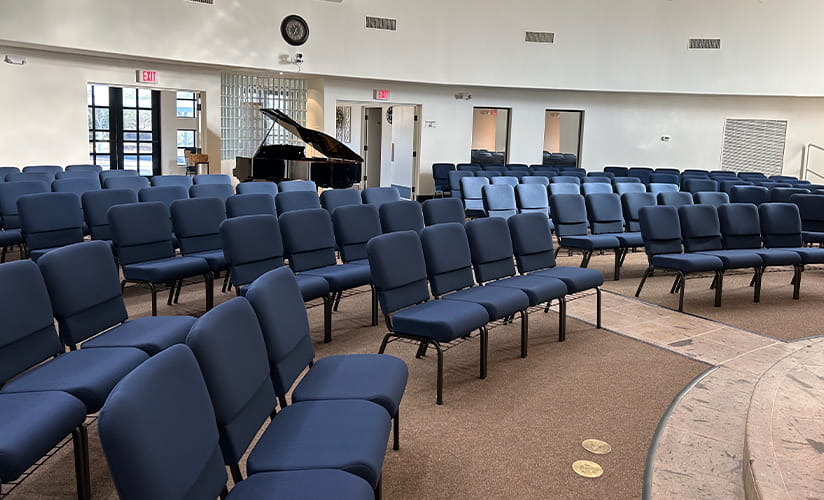
At Bertolini, we look for ways to reduce environmental impact while building furniture that serves your church for decades. We work with suppliers who share our commitment to responsible business practices and, whenever possible, source materials close to where we manufacture our products. Domestic production and shorter supply chains reduce transportation distances, improve oversight, and minimize the environmental impact of shipping.
We build many of our Bertolini chairs with recycled materials, including steel tubing that contains an average of 23% post-consumer recycled steel. Our chair frames are constructed from durable 16-gauge cold-rolled steel. At the end of a chair’s long service life, it can be disassembled so its components can be recycled into new products, keeping valuable materials in use and reducing waste.
Even the finishing process contributes to that goal. Unlike traditional liquid paint, powder coating produces a durable finish with little to no volatile organic compounds (VOCs), generates less hazardous waste, and allows excess powder to be reclaimed and reused during manufacturing. This results in a finish that resists scratches and corrosion and helps chairs remain in service longer.
Sustainability doesn’t end when your chair leaves our factory. Throughout our manufacturing process, Bertolini recycles materials such as steel, aluminum, wood, cardboard, and plastic whenever possible.
Healthier Spaces for Your Congregation
As people gather in the church every week, furniture takes center stage in each gathering. Indoor air quality forms an important, and often overlooked, part of sustainable design.
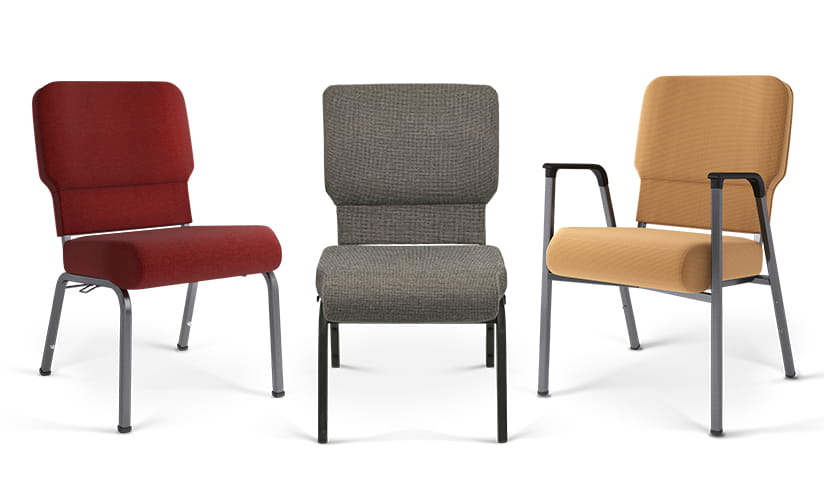
Bertolini church chairs are GREENGUARD Certified, meaning they have been independently tested to meet rigorous standards for low chemical emissions. By reducing off-gassing from furniture and building materials, GREENGUARD-certified products support healthier indoor environments for the people who use them every day.
Think about a toddler spending Sunday morning with toys in the nursery and volunteers peeling off two rows of chairs for a Bible study meeting in the fellowship hall. Congregants and staff all benefit from furniture designed with low emissions in mind.
Not an Environmental Initiative
As your church invests in furniture, you want it to serve your congregation faithfully for years. Sustainability isn’t a separate goal from that investment. In many ways, it’s the result of making wise decisions that value durability, health, and long-term stewardship from the very beginning.