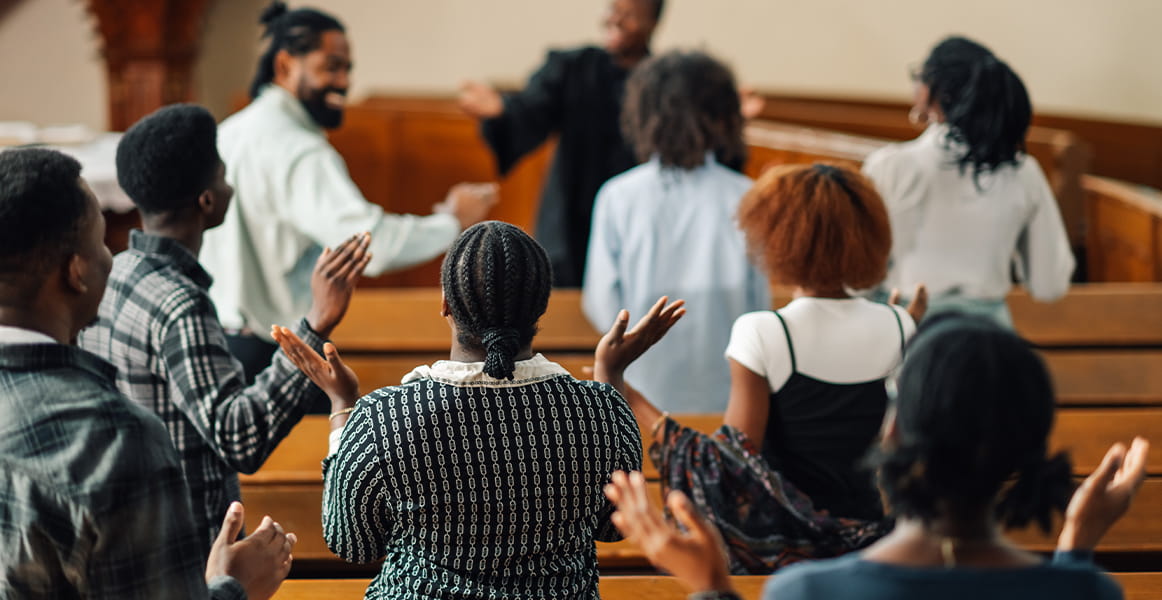
Rising early on Sunday morning, you stumble through the house, shaking the kids awake. You pass out freshly laundered clothes. Your wife hands you a tie. Somebody spills breakfast on the outfit you specifically asked them not to wear until they finished eating. One patent leather Mary Jane goes missing. Somewhere between the chaos and the car ride, you wonder whether the effort is worth it.
Why do people go to church anyway?
On the surface, the answer seems obvious. People of faith attend church to worship, pray, learn, and serve. Those answers are true, but they only tell part of the story. What’s the deeper meaning behind it all? The real reasons that lurk layers below the surface? If you walk through the door of a dentist’s office, you have a clear purpose. The same is true of church. A man in a starched shirt and a neatly tied red tie didn’t arrive there by accident. A family doesn’t spend Sunday morning wrangling children into dress clothes without a reason.
Something drew them there.
Some come because they believe in God or because they are trying to strengthen their faith. Others arrive after grief, exhaustion, loneliness, transition, or uncertainty has littered their ordinary life, and it feels heavier than usual. Often, they come to church carrying years’ worth of searching questions, deep-in-the-soul longings, up-all-night-worries, and desperate, gut-wrenching needs they may not know how to name.
At its heart, the question is not be simply, “Why do people go to church?”
A better question may be, “What are people hoping to find when they get there?
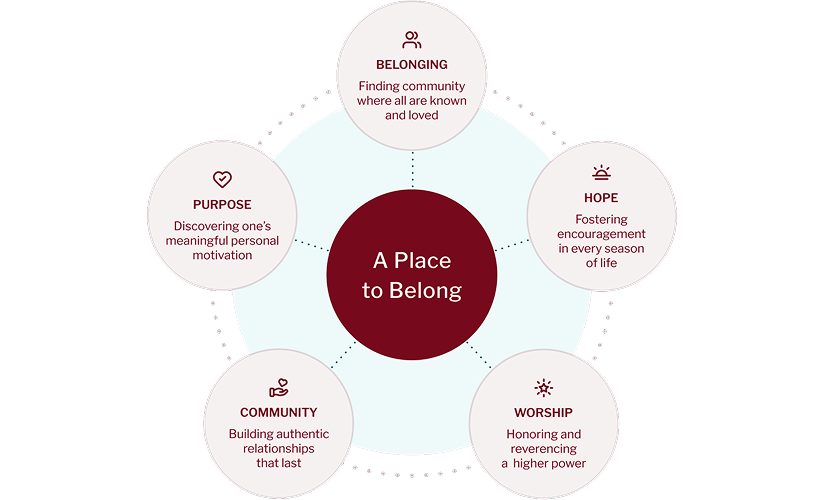
Because attendance reflects more than schedules, habits, or Sunday routines. Going to church may be a visible expression of deeper human needs being met—or not being met.
Finding Meaning in a World Full of Information
We possess unlimited access to information right on our mobile phones. Type in any question on a device and receive almost an immediate answer. In less time than it takes to ask, we can receive information that teaches us how to change a spark plug or how to trim a fruit tree. Even in an age with no shortage of information, we all wrestle with the same existential concerns: Why am I here? What matters most? How do I make sense of suffering?
Questions without easy answers often reveal what matters most to us.
Viktor Frankl, who survived Nazi concentration camps, wrote something that has influenced generations of psychologists. He said, “Those who have a ‘why’ to live can bear almost any ‘how.’” Whether one agrees with all of Frankl’s conclusions or not, that’s a profound observation. People can survive incredible circumstances when they believe there is a reason to keep going.
Humans don’t just want to live. They want their lives to mean something.
A church offers a safe place to ask those larger questions within the context of a larger story. Worship, Scripture, prayer, and shared reflection connect the average person to something bigger, the source of all the “whys.” A divine being with an organized plan for the world and all its people seems far more satisfying than a happy cosmic accident that resulted in humanity.
People don’t have to go to church to explain the world around them. They can do that at home. They go to discover meaning – why their place within the world matters.
Hope When Life Feels Heavy
Dieter F. Uchtdorf observed that a church is not an automobile showroom. Instead, it is “more like a service center, where vehicles in need of repair come for maintenance and rehabilitation.”
People rarely come to church with immaculately ordered lives. They come after experiencing loss, strained relationships, financial pressure, medical concerns, heartache, disappointment, and uncertainty about the future. They bring messy back stories and have the scars to prove them.
Going to church does not remove the burdens, but it helps a person shoulder them differently.
Even after tragedy, a person hasn’t reached the end of their story. A fresh perspective says that there’s a reason to keep moving forward. As a churchgoer communes with God through prayer, music, spirituality, and community, hope fills the empty spaces in the soul where discouragement takes root easily. That kind of hope is not shallow optimism. It’s courage to endure the present because of a belief that the future can be different. It’s taking the next step without the finish line in view.
For someone weathering a difficult season, the message that “tomorrow is still worth pursuing” is powerful enough to put the car in gear and find a seat in church.

Belonging Beyond Casual Connection
Ironically, we live in an age of unprecedented communication. Messages travel across the globe in seconds. A century and a half ago, Pony Express riders crossed deserts, rivers, and mountain ranges to carry handwritten letters between loved ones. The goal was never the paper itself. It was connection. Families wanted to know someone was safe. Friends wanted to share news. Communities wanted to remain tied together despite the miles between them.
Today, communication is effortless. We solved the communication problem and discovered that loneliness still exists.
Many people today are starved for belonging. They interact with coworkers, neighbors, classmates, and online communities as an online avatar, but lack the satisfaction of being deeply known by any of them.
For most of human history, belonging happened naturally. People lived down the street from their grandparents. They knew their neighbors’ dog’s name. They sat on the porch and shared a sip of lemonade. They enrolled in civic groups, clubs, and local communities. Today, many of those community staples have weakened.
Church offers something different.
At its best, church is a place where people are not just recognized but remembered. Someone notices when they are missing. Someone asks about the surgery, the new baby, the aging parent, the job interview, or the grief that still lingers months later.
That kind of belonging does not happen automatically. It develops through repeated presence, shared worship, service, conversation, and small moments of care. Individual lives weave together. People celebrate milestones and support one another through seasons of joy and hardship.
Over time, those relationships begin to stretch across generations. Children grow up watching their parents serve. Parents follow the example of grandparents who sat in the same pews, sang the same hymns, and practiced the same faith. What begins as belonging gradually evolves into tradition.
For some families, church is more than a place they attend. It becomes part of their identity. A grandparent worshiped in the building. A parent preached there. A child was baptized, blessed, confirmed, or married there. Each generation inherits something from the one before it.
When our world changes daily, familiar songs, seasonal rhythms, liturgy, communion, prayer, and gathering in the same chapel week after week create a sense of predictability. These repeated practices remind people that they are part of something older, larger, and more enduring than the present moment.
When that happens, church becomes more than a place people attend. It becomes a community to which they belong.
Forgiveness in a Culture of Performance
Modern life often feels like a scorecard, a running tally of all the reasons a person is valuable.
People sit across the desk from their supervisor and track metrics that demonstrate their productivity. On social media, one carefully curated photo after another offers proof of a successful and enjoyable life. Even personal growth becomes another project to optimize. Read more books. Wake up earlier. Exercise harder. Become a more patient parent. An intentional spouse. A better version of yourself.
With scorecards in hand, society continues to pound that message like a less-than-subtle woodpecker: do more, be more, achieve more.
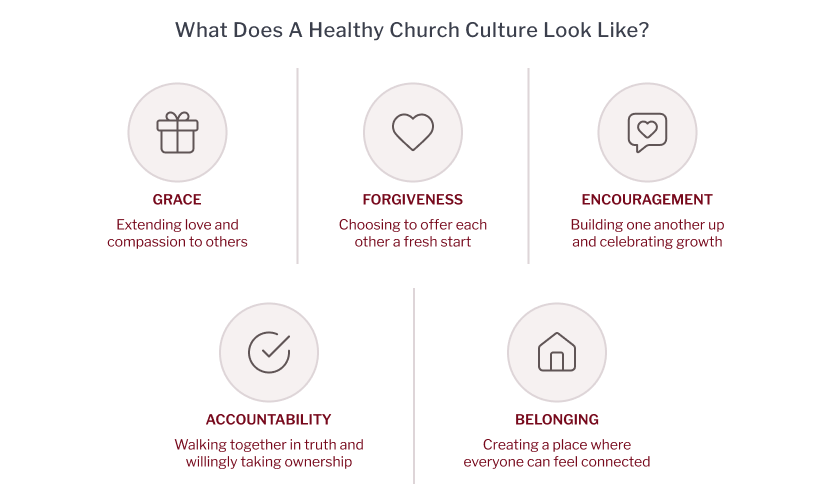
Church offers a revolutionary respite from it all. Freedom from the exhausting belief that every mistake or misstep permanently reduces worth. Relief from the self-condemnation of a lack of tally marks. It gives us permission to let go of the past, set down the scorecard, and lean into the belief that we have value before we earn it.
Eventually almost everyone reaches a point where they cannot optimize their way out of being human.
They fail. They regret. They disappoint.
In many areas of life, failure feels permanent. Church offers grace. A place where confession, forgiveness, restoration, and second chances are central to the message.
Perhaps that is why grace remains one of the church’s most enduring messages. Sometimes people do not need another challenge. They need permission to begin again.
Why Do People Go to Church and What Does This Mean for Worship Leaders?
People come to church carrying far more than a Bible and a set of car keys. They arrive with questions. They carry grief, uncertainty, hope, gratitude, regret, loneliness, and burdens that may not be visible to anyone around them.
A worship leader cannot solve every problem that walks through the door. They cannot manufacture meaning, create faith, or erase hardship. What they can do is make space.
Space for reflection. Space for worship. Space for conversation. Space for community. Space for people to wrestle with life’s biggest questions and encounter something greater than themselves.
In many ways, that is the true purpose of a church environment. A sanctuary provides more than seating. A fellowship hall offers more than a place to gather. These spaces create opportunities for people to connect, learn, serve, grieve, celebrate, and belong.
People go to church for many reasons, and not all of them are easy to measure. They come because they are searching for something that ordinary life does not always provide. They come looking for meaning in a confused world. They need hope during difficult seasons. They yearn for belonging, forgiveness, guidance, and comfort.
In the end, people do not gather at church because life is easy. They gather because they are searching for something profoundly human: meaning in their struggles, hope for the future, grace for their failures, and companions for the journey.