Quelques tables restent dans le gymnase, encore parsemées de vermicelles et de glaçage après une vente de pâtisseries réussie pour les jeunes. Un jeune homme robuste de 17 ans essuie et plie les tables et les transporte jusqu'au placard de rangement.
Non loin de là, un retraité, appuyé contre des chaises empilées, interroge le jeune homme sur ses projets d'études. L'adolescent remarque la casquette de la 82e division aéroportée que porte l'homme plus âgé et lui pose des questions à ce sujet. Le retraité sourit en se rappelant ce que cela lui a fait d'être appelé sous les drapeaux à peu près au même âge que le jeune homme à ses côtés.
Aucun des deux n'était venu à la vente de pâtisseries dans l'espoir de créer des liens. Qui aurait cru qu'une équipe de nettoyage puisse donner naissance à une relation intergénérationnelle aussi forte en si peu de temps ?
Des histoires comme celle-ci se produisent chaque semaine dans les églises de tout le pays. Si les discussions sur les générations se concentrent souvent sur ce qui nous sépare, les recherches suggèrent que nous avons peut-être plus de points communs que nous ne le pensons. Une étude récente de Cogenerate L'étude a révélé que 96% personnes, quel que soit leur âge, souhaitent avoir la possibilité de travailler avec différentes générations pour aider les autres et améliorer le monde qui les entoure.
À première vue, ce constat peut sembler peu surprenant. La plupart des gens souhaitent contribuer positivement à leur communauté. Ce qui est étonnant, c'est le fort consensus intergénérationnel sur l'importance d'agir ensemble. Dans une culture qui met souvent l'accent sur les différences générationnelles, cette étude révèle un désir partagé de lien social, de collaboration et de sens.
Les amitiés entre personnes d'âges différents sont plus fréquentes qu'on ne le pense.
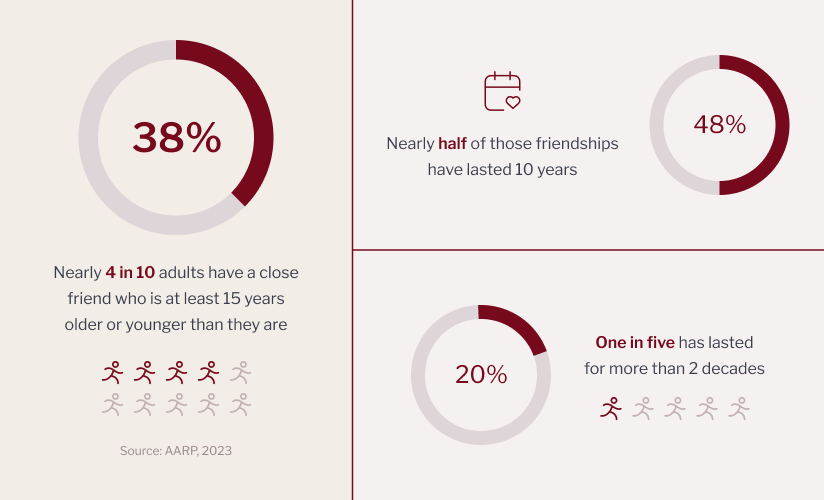
Selon une enquête de l'AARP, presque quatre adultes sur dix ont un intime qui a au moins 15 ans de plus ou de moins qu'ils ne le sont. Plus remarquable encore, près de la moitié de ces amitiés ont duré au moins 10 ans., tandis qu'une sur cinq perdure depuis plus de deux décennies.
Réfléchissez à ce que cela signifie en pratique :
Une jeune femme est accroupie près d'un bénévole qui pourrait être son grand-parent, au jardin communautaire. Une mère dont les enfants ont quitté le nid joue à cache-cache avec un tout-petit lors d'un voyage humanitaire à l'étranger. Une étudiante apprend le patchwork auprès d'un groupe régulier de couturières expérimentées. Au fil des heures, la conversation s'approfondit. Ce qui commence comme de simples bavardages pour passer le temps se transforme en une amitié durable, empreinte d'une sincère bienveillance.
Des années plus tard, ils oublieront peut-être la corvée de désherbage ou le don de courtepointe qui les a réunis. Ils s'intéresseront plutôt aux petits-enfants, à la carrière, aux problèmes de santé et à l'agrandissement de la famille de l'autre.
La vie moderne sépare les générations
Les données de l'AARP suggèrent le pouvoir d'une amitié intergénérationnelle durable. Les jeunes adultes y puisent souvent une perspective nouvelle grâce à une relation différente et enrichissante. Les adultes plus âgés y découvrent souvent de nouvelles idées et un nouveau sens à leur vie. Tous deux se font de nouveaux amis. Si ces relations sont si précieuses, pourquoi semblent-elles si rares ?
Une partie de la réponse se trouve peut-être dans l'organisation de la vie moderne :
Les enfants passent la majeure partie de leurs journées à courir avec d'autres enfants. Les adolescents échangent des SMS et attendent le bus avec leurs pairs. Les adultes passent leurs heures de travail avec des collègues du même âge. Même les loisirs, les ligues sportives et les groupes sociaux attirent souvent des personnes appartenant à une même tranche d'âge. À bien des égards, nous vivons dans l'une des périodes les plus marquées par la ségrégation des âges de l'histoire moderne.
Des chercheurs du Centre sur la longévité de l'Université de Stanford Ils affirment que la ségrégation par âge limite les possibilités de liens significatifs entre les générations. Le problème ne réside pas dans un manque d'intérêt. En réalité, l'étude Cogenerate Nous avons constaté que l'un des obstacles les plus fréquemment cités par toutes les générations était tout simplement de ne pas savoir où trouver des occasions de côtoyer des personnes d'âges différents ni comment s'y prendre.
Pour de nombreuses communautés, une réponse est restée remarquablement constante : l’église locale.
Une occasion unique de susciter des relations intergénérationnelles
Entrez dans un supermarché et vous verrez un jeune adulte, écouteurs sur les oreilles, choisir une pizza surgelée. Deux jeunes enfants suivent leur mère qui passe et prend un sachet de nuggets de poulet. Un homme âgé, appuyé sur une canne, avance à petits pas dans l'allée, cochant “ légumes surgelés ” sur sa liste de courses manuscrite. Nombre de situations rassemblent des personnes de générations différentes. Rares sont celles qui leur offrent de véritables occasions d'échanger.
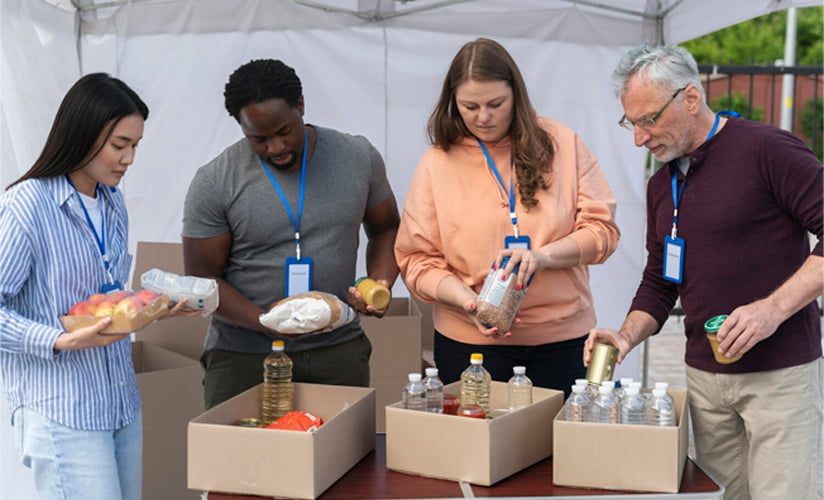
Contrairement aux écoles ou aux clubs sportifs qui établissent une distinction stricte entre les groupes d'âge, les églises accueillent tout le monde en se basant sur un système de croyances commun. Elles créent délibérément des occasions pour que des personnes de différents âges collaborent naturellement. Ces interactions autour d'un objectif commun commencent rarement par des activités de rapprochement. La plupart des gens arrivent concentrés sur la tâche à accomplir : faire la vaisselle après un événement, préparer des paniers-repas, enseigner aux enfants, servir des repas ou chanter ensemble lors d'un programme de fêtes.
Pourtant, quelque chose se produit lorsque les gens retournent chaque semaine à ces activités intergénérationnelles de l'église.
Peu à peu, la conversation s'éloigne du sujet principal. Quelqu'un se souvient que les examens finaux approchent à grands pas. Quelqu'un s'enquiert d'une récente opération du genou. Un bénévole remarque qu'une autre famille a manqué quelques dimanches et prend de ses nouvelles.
Le projet de service devient la raison pour laquelle les gens se rencontrent, mais pas la raison pour laquelle ils restent en contact.
Comment les églises peuvent aider
Il n'est pas nécessaire de mettre en place un programme intergénérationnel complexe pour commencer. Bien souvent, les églises possèdent déjà les éléments nécessaires. Il suffit de créer des occasions pour que des personnes de différents âges puissent interagir autour d'un objectif commun.
1. Mélanger les générations au sein des équipes de bénévoles
Naturellement, de nombreuses églises ont tendance à séparer les gens par âge. Les enfants y assistent. ministère des enfants. Les adolescents rejoignent des groupes de jeunes. Les adultes font du bénévolat avec leurs pairs.
Recherchez les occasions de fusionner ces groupes.
Au lieu de reléguer un coin réservé aux enfants avec un atelier de tricot, intégrez-le à l'événement principal. Invitez les adolescents à faire sauter des crêpes avec les adultes lors du petit-déjeuner de la Fête des Fondateurs. Mélangez les générations lors de l'organisation des tournées de collecte des dons alimentaires. Associez les bénévoles jeunes et moins jeunes pour la distribution de prospectus dans la rue principale. La collaboration régulière favorise les liens.
2. Transformez les événements annuels en occasions de renforcer les relations
Les églises organisent déjà des activités qui rassemblent plusieurs générations.
Les programmes de Noël, les dîners paroissiaux, les camps d'été, les projets de service, les voyages missionnaires et les événements des fêtes nécessitent tous une planification, une préparation et des bénévoles.
Réfléchissez à la manière dont chaque groupe d'âge peut apporter ses points forts à l'activité dans son ensemble.
Essayez d'impliquer tout le monde :
- Le groupe de jeunes peut réaliser les marque-places.
- Les enfants pourront distribuer des glaces à l'eau à la fin de l'office.
- La fleuriste retraitée peut apprendre aux autres adultes comment réaliser un centre de table.
Créer des opportunités pour que les gens puissent nouer des relations tout en travaillant à un objectif commun.
3. Créer des occasions d'interaction informelle
N'oubliez pas que toutes les amitiés ne se nouent pas lors d'une mission pastorale intergénérationnelle formelle.
Les repas partagés, les moments de convivialité et les rassemblements communautaires offrent souvent un espace pour des conversations qui n'auraient jamais lieu lors d'un office religieux. Il suffit de faire preuve de souplesse avant, pendant et après l'événement.
Le but n'est pas de forcer l'interaction, mais de la faciliter.
4. Inviter plusieurs générations à partager leurs expériences
Chaque génération a quelque chose à apporter.
Les plus jeunes apportent énergie, idées neuves et perspectives inédites. Les plus âgés apportent expérience, contexte historique et enseignements tirés de décennies de vie et de foi.
Cherchez des occasions de faire converger ces points de vue. Un club de lecture régulier invite jeunes et moins jeunes à discuter des défauts des personnages. Une sortie camping qui se termine autour d'un feu de camp favorise naturellement le partage d'histoires personnelles et d'expériences de vie. Une réunion de témoignages permet même aux plus jeunes de prendre la parole et de raconter comment ils reconnaissent la présence de Jésus dans leur vie.
Encouragez les discussions lors des activités pastorales afin de donner la parole à tous. Ce forum ouvert pourrait ouvrir la voie à des échanges encore plus approfondis.

5. Concevoir un espace intentionnel
Chaque projet de service a besoin d'un lieu de rassemblement. dîner à l'église Il faut un espace pour partager un repas. Chaque spectacle de Noël a besoin d'une salle pour les répétitions. Les programmes peuvent rassembler les gens, mais l'environnement détermine souvent s'ils restent et tissent des liens.
Une discussion sur les liens intergénérationnels intentionnels serait incomplète sans prendre en compte les espaces où se déroulent ces interactions. Les églises investissent souvent des efforts considérables dans leurs activités, mais l'environnement physique peut soit favoriser, soit limiter ces efforts. Une congrégation peut souhaiter organiser une formation pour les bénévoles, mais cette activité nécessite un espace suffisamment grand pour que les participants puissent travailler côte à côte.
C'est une des raisons salles de réunion, Les salles polyvalentes et les espaces de rassemblement demeurent des éléments précieux de l'église moderne. Espaces flexibles permettre aux congrégations de s'adapter aux besoins changeants tout au long de l'année, qu'il s'agisse de projets de service, d'événements pastoraux, de célébrations saisonnières ou d'actions communautaires.
Essayez de créer un environnement confortable Un lieu où l'on peut s'attarder, collaborer, partager un repas et tisser des liens. Souvent, les conversations les plus importantes ont lieu avant l'événement et se prolongent bien après sa fin.
Créer des liens durables
L'adolescent qui aidait à ranger après la vente de gâteaux ne se souvient peut-être pas du nombre de tables qu'il a pliées cet après-midi-là. Le vétéran, quant à lui, ne se souvient peut-être pas du nombre de chaises qu'il a empilées.
Des années plus tard, cependant, tous deux se souviendront peut-être de cette conversation initiale.
Nombre d'adultes peuvent attribuer leur cheminement spirituel à un bénévole plus âgé, un animateur de jeunesse, un mentor ou un membre de leur église qui s'est investi auprès d'eux durant leur jeunesse. De même, de nombreux adultes plus âgés peuvent citer les jeunes générations qui ont insufflé un nouveau sens à leur vie.
Le spectacle de Noël tombera dans l'oubli. La collecte de fonds prendra fin. Le feu de camp s'éteindra. Des années plus tard, on se souvient rarement de l'activité partagée en elle-même. On se souvient surtout des personnes avec qui on l'a partagée.
Cette tâche est peut-être temporaire. Mais comme le montrent les recherches, les relations qui en découlent peuvent durer des décennies.